
Rachel’s story
On November 9, 2022, Rachel sustained a traumatic brain injury. Five months later, she returned to the Boston Marathon.
Start reading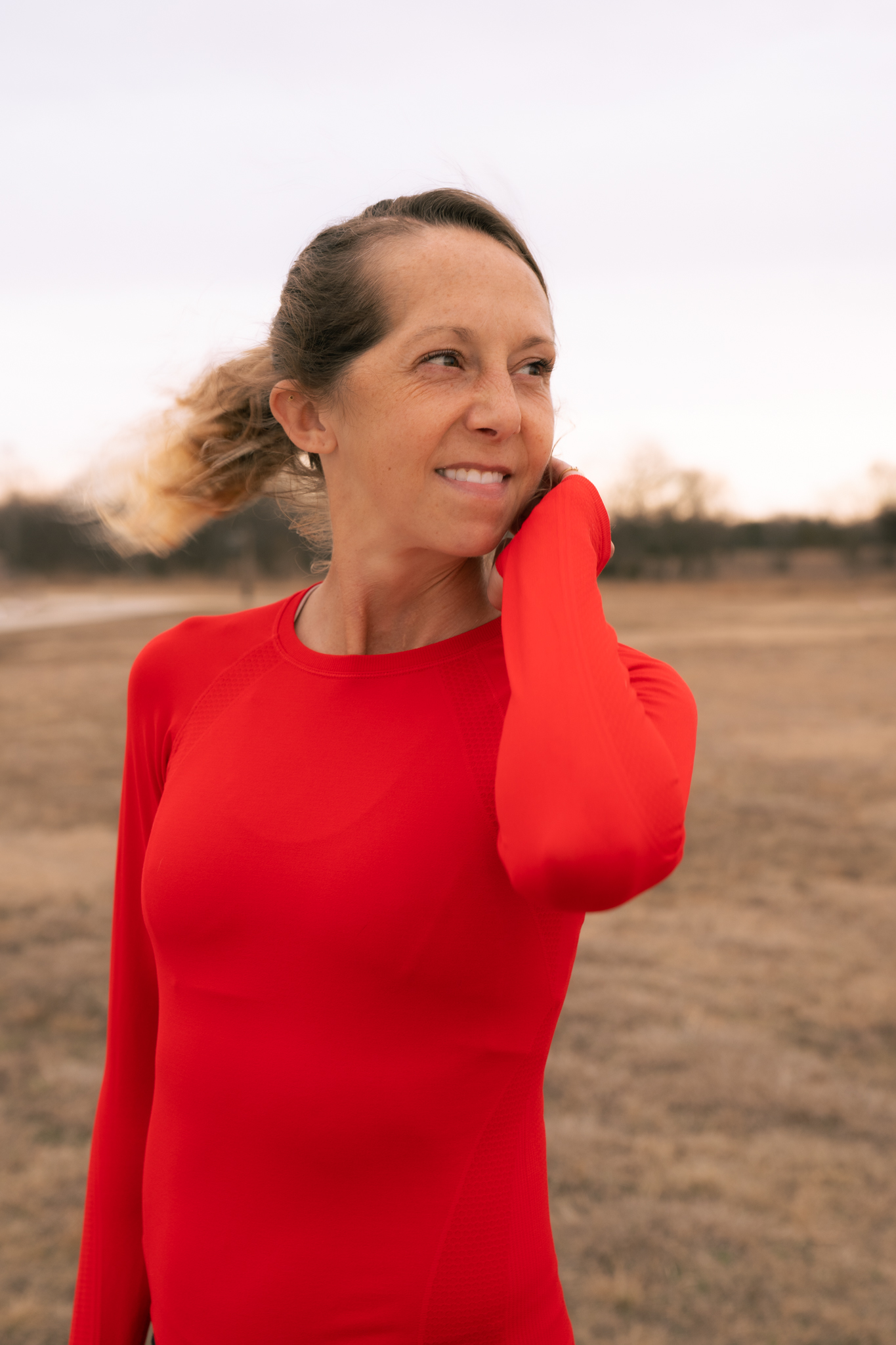
The night of the accident
November 9, 2022. Oklahoma City.
Cooking and running had been part of Rachel Foster’s life for years. She had led a volunteer kitchen with Mercy Ships, where she met John, and they eventually made their home in Oklahoma City and bought a restaurant together. At thirty-five, she was its chef as well as its owner, leading twelve chefs and cooks each day. She was healthy, with no previous medical conditions or surgeries.
By the time Rachel opened the doors at 7:30, she had already been awake for four hours and run ten miles. Those early runs gave her time to herself before the kitchen filled her day. John worked the later shift, so even though they owned the restaurant together, they often missed each other at home. They left affectionate notes around the house for each other to find.
The hours took a toll on their marriage. They had spoken about the distance between them, and eventually decided to close the restaurant on Mondays so they could spend more time together.
On November 9, 2022, they had a rare evening off together. Just before nine PM, they were riding electric scooters the few blocks back home after a date when Rachel fainted, fell and hit the pavement. John heard the scooter hit the ground. He called 911 and stayed beside her until help arrived.
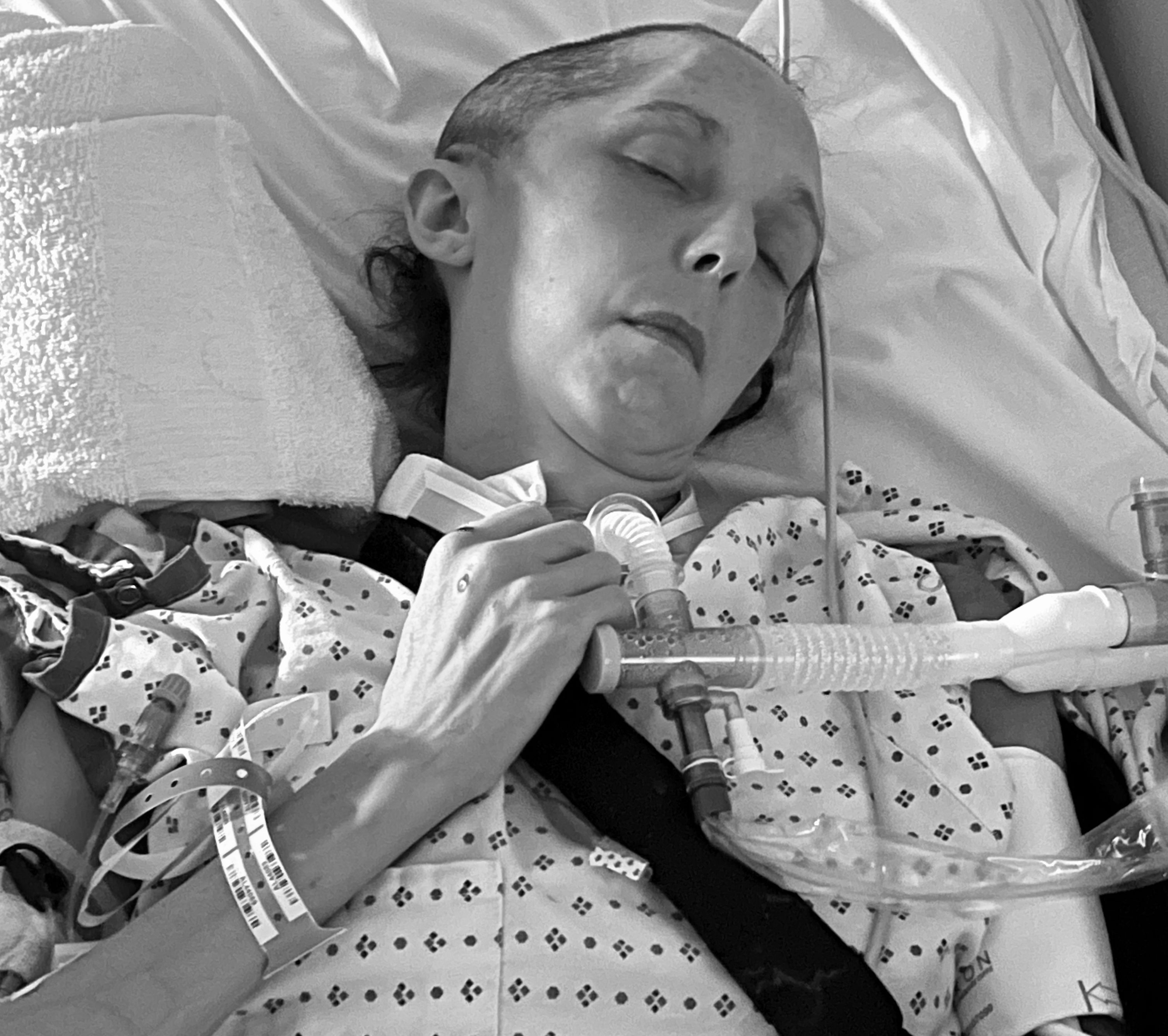
Rachel could not breathe on her own. Paramedics placed a breathing tube and took her to OU Medical Center, where the trauma team began scans, blood transfusions and treatment for her injuries. John waited at the hospital while they worked.
John at the hospital
During those first hours, three family members in three different states sent John the same passage from Luke. Two were from Rachel’s family and one was from his. The messages arrived within seconds of each other; none of the senders knew what the others had written.
John held onto those words through the days ahead, as her doctors explained her injuries and the decisions he would have to make.
The first night in intensive care
3:56 AM. November 10, 2022.
When Rachel arrived, she scored three on the Glasgow Coma Scale, the lowest possible score. The scale measures whether a person opens their eyes, speaks or responds with movement. She spent those first hours in the emergency trauma area, where the team worked to stabilize her before she could be moved to intensive care. She was finally transferred early on November 10, with a ventilator breathing for her.
What a GCS score of 3 means
The Glasgow Coma Scale records eye opening, speech and movement. Rachel’s arrival score was 3. Later notes use 3T; the T means she had a breathing tube, so speech could not be tested. Sedation and medications that prevent movement also affect what can be observed during an examination.
Context: Understanding traumatic brain injury — MSKTC. Rachel’s clinical observations are cited above.
See Rachel’s early blood tests
Rachel needed blood transfusions, and her team was also treating changes in her blood chemistry. These early results include low hemoglobin and abnormalities in electrolytes and clotting. The values come from several blood draws during her admission.
Her blood loss, chest injuries and brain injury all needed attention during the same hours. The transfusions and other treatments continued as her team prepared for surgery.
Surgery to relieve the pressure
Overnight. November 9 to 10, 2022.
Through the night, the team watching the pressure inside Rachel’s skull had called repeatedly for another scan. After midnight, the pressure climbed into the 60s.
The new scan showed that the bleeding had grown and her swollen brain was being pushed out of place. John agreed to emergency surgery.
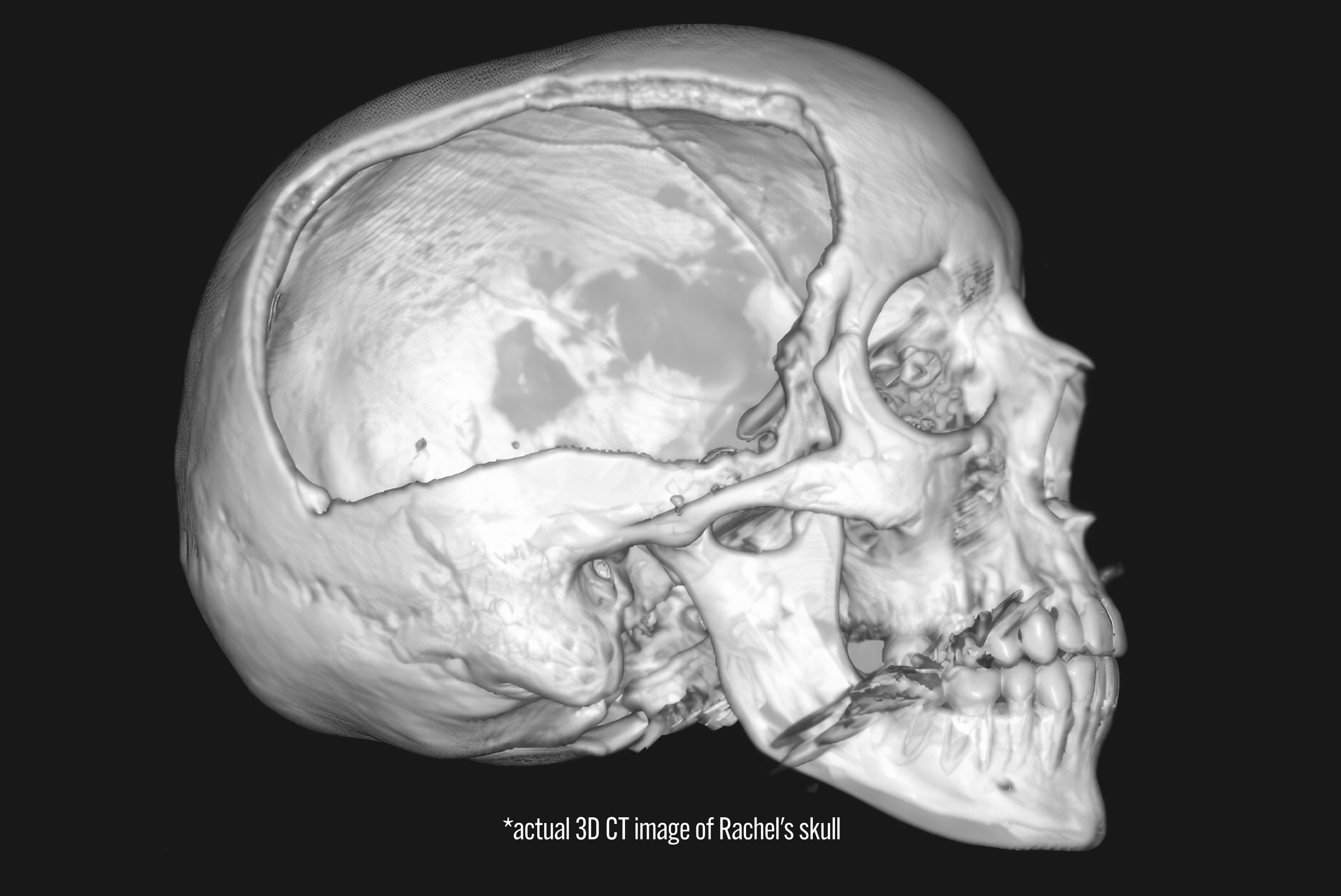
That morning, the team removed a large section of the right side of Rachel’s skull to give her brain room to swell. Beneath it, they found severely damaged tissue and torn blood vessels. She had lost so much blood that her hemoglobin fell from 13.9 to 6.5, and she needed transfusions. The operative report describes “multiple areas of severe brain damage and multiple avulsed damaged cortical arteries and veins.”
What the MRI showed
Later MRI scans showed diffuse axonal injury and scarring in four regions of Rachel’s brain. Axons are the nerve fibers that carry signals between brain cells. Damage to those connections was another part of her injury, alongside the bleeding and swelling the team treated during her hospital stay.
Understanding diffuse axonal injury
Different parts of the brain communicate through axons. Forces acting on the brain during an injury can damage these fibers, disrupting those connections. The effects depend on where and how extensively the fibers are injured.
These injuries can be difficult to see on early CT scans. Rachel’s later MRI findings are cited below.
Rachel’s MRI findings: official medical records pp. 720 to 721, 971.
The other injuries
Rachel also had fractures through her skull, spine, collarbone, breastbone, ribs, pelvis and right lower leg. All twelve ribs on her left side were broken, several in more than one place. Part of her chest wall was unstable, an injury called a flail chest.
Her lungs were bruised, and air had collected around a lung where it could not expand properly. The team placed a chest tube and continued mechanical ventilation while treating the injuries to her brain.
See the injuries and chest X-ray
What her chest injuries meant
Bruised lung tissue interferes with oxygen passing from the air into the blood. Mechanical ventilation supported Rachel’s breathing while her chest and brain injuries were treated.
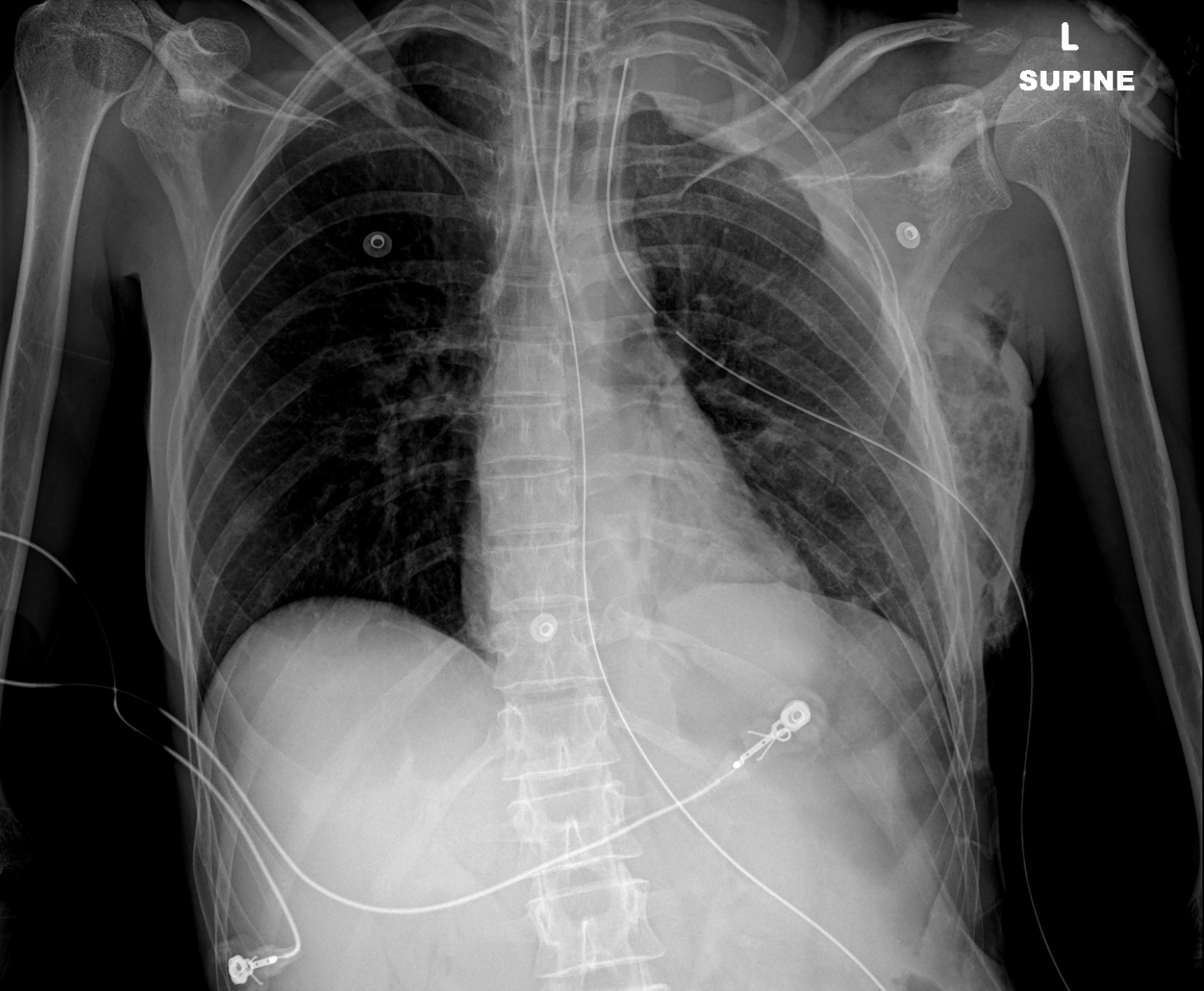
Rib-fracture records: official medical records pp. 22, 26, 35, 86.
Nine days in intensive care
In the days after surgery, John stayed beside Rachel while the team tried to control the swelling in her brain. She remained in a coma. The notes repeatedly recorded a GCS of 3T, and her doctors monitored the pressure inside her skull and checked for responses.
Her treatment included sedation, medication to draw fluid out of the swollen brain, and medication to prevent movement.
He continued praying as her doctors began talking with him about what would happen if she did not recover.
Understanding the pressure inside her skull
Rachel’s November 11 CT showed central herniation: the swelling had pushed brain tissue downward and compressed the normal fluid spaces around it. The scan also showed a four-millimeter shift to the left. This threatened the brainstem, which controls breathing and other vital functions. High pressure inside the skull also works against the blood trying to enter it, threatening the brain’s supply of oxygen.
Her sodium reached 158 mmol/L, above the laboratory’s reference range of 137–146. The team was deliberately targeting a level around 155 to help draw fluid out of her swollen brain. That treatment required close monitoring: very high sodium during this therapy is associated with acute kidney injury. Her doctors had to balance controlling the swelling with the risks of treatment.
CT: official medical records PDF pp. 657–658. ICP: pp. 43, 50, 56, 67, 68, 79, 125. Sodium result: p. 442; treatment target: p. 196. Treatment context: Neurocritical Care Society guidelines.
The plan for comfort care and organ donation
What comfort care would mean
Comfort care focuses on relieving suffering. The plan discussed for Rachel was to withdraw life-sustaining treatment and proceed with organ donation after circulatory death, abbreviated DCD in the notes.
Rachel had registered as an organ donor. By around November 17, LifeShare was involved and the hospital was preparing for the withdrawal of life support.
The team examined her heart, prepared blood products and carried out the screening needed for donation. Even the reason printed on her laboratory orders had changed:
Read the organ-donation planning notes
November 10, 2022
Mortality estimate: 90%
ICUNovember 10, 2022Mortality estimate: 90%
November 11, 2022
Mortality estimate: 90%
ICUNovember 11, 2022Mortality estimate: 90%
ICP at 29. John, Rachel's husband, updated on imaging, clinical condition, and poor prognosis.
Dr. Nathan Nelson, DO, Trauma ICU Progress Note. official medical records pp. 56
November 12, 2022
Mortality estimate: 90%
ICUNovember 12, 2022Mortality estimate: 90%
ICP elevated between 22 and 26. The note records another discussion with John.
Dr. Sherwin A. Tavakol, MD, Neurosurgery Progress Note. official medical records pp. 67
November 13, 2022
Mortality estimate: 95%
ICUNovember 13, 2022Mortality estimate: 95%
“I spoke to [John, Rachel's husband,] twice today. He is trying to absorb the devastating information. He asked appropriate questions. I tried to explain what 'grim prognosis' means. He did not want to talk to the Palliative care team yet.”
Dr. Mary-Margaret Brandt, MD, Trauma ICU Attending Progress Note. Official medical records pp. 65–66. The published chronology groups November 12–13.
November 14, 2022 4:44 PM addendum
Mortality estimate: 95%
ICUNovember 14, 20224:44 PM addendumMortality estimate: 95%
“prognosis quite poor, d/w family that we're running out of options and NES thinks prognosis poor. family understands, considering options.”
Dr. Frank Wood, MD, Trauma Attending addendum. Original record PDF pp. 113–114 (printed pp. 104–105); quoted text on PDF p. 114. Signed November 14 at 4:55 PM.
November 15, 2022
Mortality estimate: 95%
ICUNovember 15, 2022Mortality estimate: 95%
“Will likely go comfort care this afternoon.”
Trauma ICU Progress Note. Official medical records p. 116.
November 15, 2022 7:18 PM addendum
Mortality estimate: 95%
ICUNovember 15, 20227:18 PM addendumMortality estimate: 95%
“ICP significantly elevated, 40s today. husband states desires comfort care, wants family to be here, he also states to us/initates that he wants to speak with organ donation group.”
Dr. Frank Wood, MD, Trauma Attending addendum. Original record PDF pp. 124–126 (printed pp. 115–117); quoted text on PDF p. 125. Signed November 15 at 7:20 PM. Original spelling retained.
November 18, 2022 9:31 AM
Mortality estimate: 95%
ICUNovember 18, 20229:31 AMMortality estimate: 95%
“NES to sign off at this time given family has elected to pursue comfort care.”
Neurosurgery Sign-Off Note. Official medical records p. 166.
November 19, 2022 morning
Mortality estimate: 95%
ICUNovember 19, 2022morningMortality estimate: 95%
“Request by life share. Likely will withdraw care tomorrow.”
Trauma ICU Progress Note. Official medical records p. 168.
The estimate refers to Rachel’s condition before awakening.
November 19, 2022 note filed 6:26 PM
ICUNovember 19, 2022note filed 6:26 PM
The evening note documented a change that had occurred earlier that day.
Day 1 of 10
Rachel wakes up
November 19, 2022. Early Afternoon.
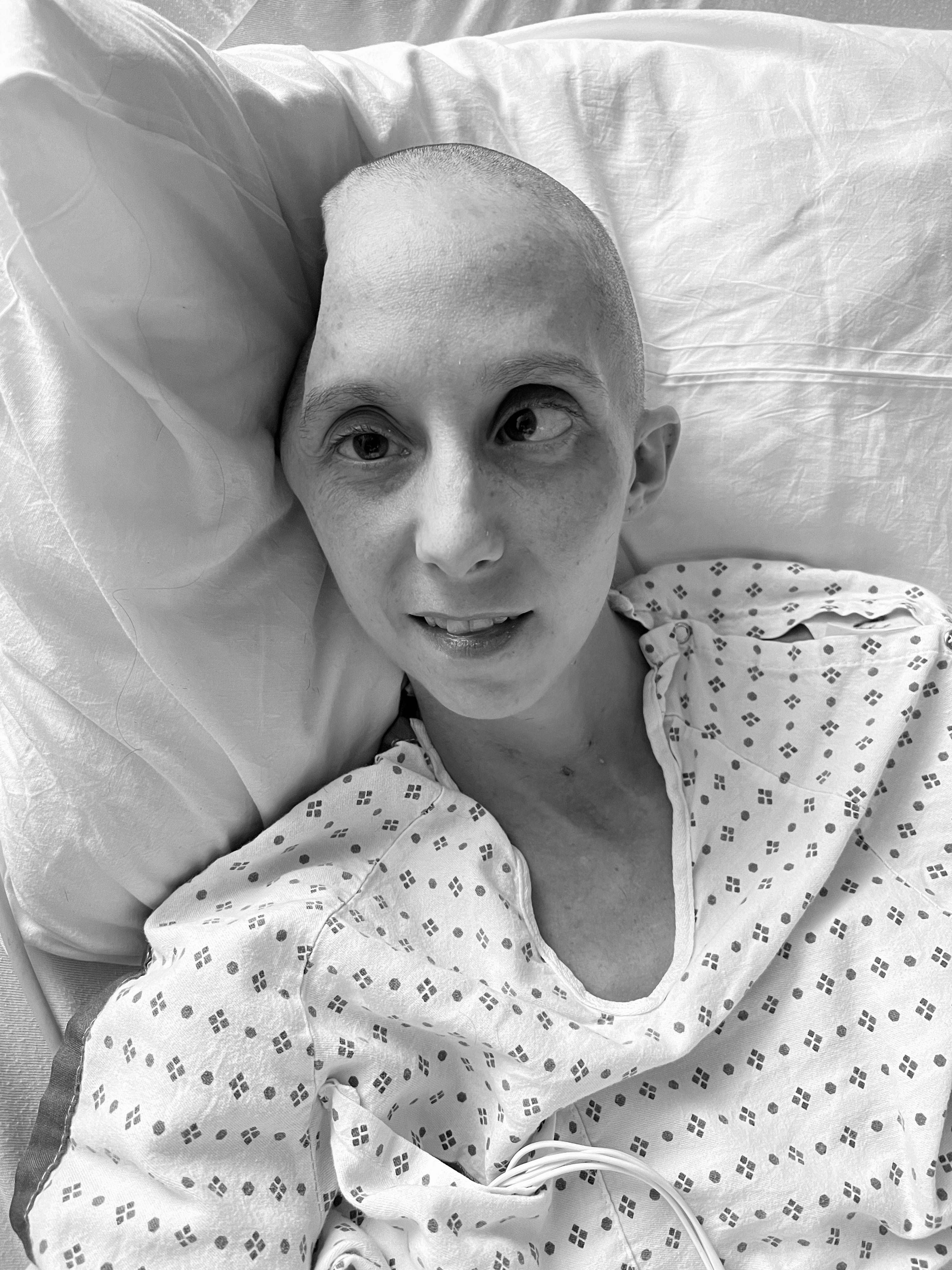
On November 19, ten days after the accident, God healed Rachel. With the organ donation plan still in place, her sedation had been stopped. John was near the foot of her bed when he noticed her eyes opening.
Dr. Nathan Nelson came to examine her. When he asked her to squeeze a hand and move her toes, she did. John watched him test whether she could breathe without the ventilator initiating the breath. She breathed on her own.
Recovery of consciousness after a severe brain injury can unfold over days, weeks or months. Dr. Nelson assessed Rachel at GCS 11T during that first examination, the highest possible score with a breathing tube: maximum eye-opening and best-motor-response scores, with speech untestable.
Official medical records PDF p. 196. Recovery of consciousness: MSKTC.
The plans for comfort care and organ donation were cancelled. Her responses varied between examinations, and the next morning her neurosurgery team recorded another assessment:
Over the next few days, Rachel gave a thumbs up, made an OK sign and waved to the social worker. Amantadine, a medication used in brain-injury recovery, was started on November 21, two days after she first followed commands. The chart also recorded how the family was responding:
Working toward Boston
November 2022 to April 2023
Rachel woke to a body she did not know how to manage. She was in pain, had trouble with her vision and could not sit up without help. Moving her left side was difficult. John explained her injuries and reassured her when she became frustrated with herself. Things she had done without thinking now required help and practice.
She began talking to him about running again while she still needed help moving in bed. Boston was already on her calendar for April. At first she kept that goal between the two of them, aware of how unlikely it sounded. John encouraged her, but privately struggled to imagine her ready for a marathon so soon.
By December 8, while she still needed a feeding tube, Rachel had told an orthopedic resident about Boston. He put her plan in the chart.
Running had given Rachel time to herself during long restaurant weeks. She wanted that part of her life back. For now, John helped her through the work in front of her, encouraging her when she struggled to see the progress he could see.
Rachel found it difficult to hear people call her a miracle while she was in so much pain and could do so little for herself. She wanted to be home, to cook and to move around without someone helping her. Recovery meant working toward those ordinary parts of her life as well as the marathon.
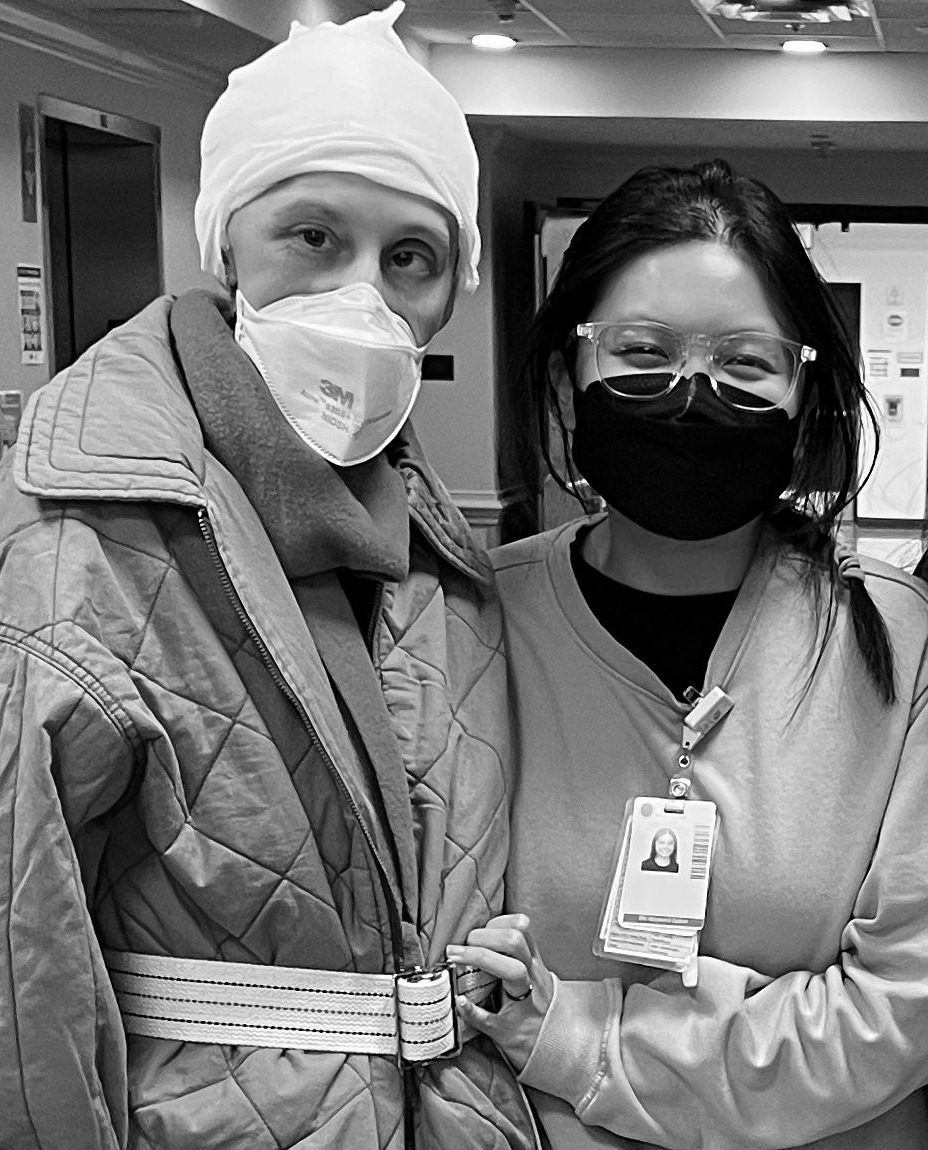
After thirty-five days at OU Medical Center, Rachel left for Shepherd Center in Atlanta on December 14. A winter storm grounded the planned medical flight, and Dr. Brandt cleared her to fly commercially. She boarded wearing a protective helmet because part of her skull was still missing. The journey was painful, and John traveled with her.
At Shepherd, rehabilitation filled their days. Rachel practiced walking safely, worked on her vision and tried following a recipe so the therapists could see how she managed a familiar task. Severe head pain could exhaust her within fifteen minutes to half an hour. John helped her through the daily routine and tried to make her more comfortable.
At Christmas, Rachel called her running partner Tim to tell him they were still going to Boston in April. He suggested waiting another year. She had no interest in postponing it.
In January, surgeons fitted a custom implant to replace the missing section of her skull. The relief from the head pain allowed her to do more in therapy. When her physical therapist asked what she wanted to work toward, she told him about running. They began with walking.
She practiced stepping over obstacles and gradually began jogging. After therapy, she and John went for walks in the park. Staying upright took so much concentration that following directions and noticing where the path turned could be difficult. They kept practicing.
As April got closer, Rachel was running again. She still worried about whether she could finish the race and what might happen on the course. Tim agreed to stay beside her throughout it. In March, she and John returned to Oklahoma, where she could rest and continue preparing for Boston.
Back at the Boston Marathon
April 17, 2023. Hopkinton, Massachusetts.
Tim was a dear friend and Rachel’s running partner of many years. His daughter was Rachel’s age. He and Rachel had planned to run Boston together before the accident.
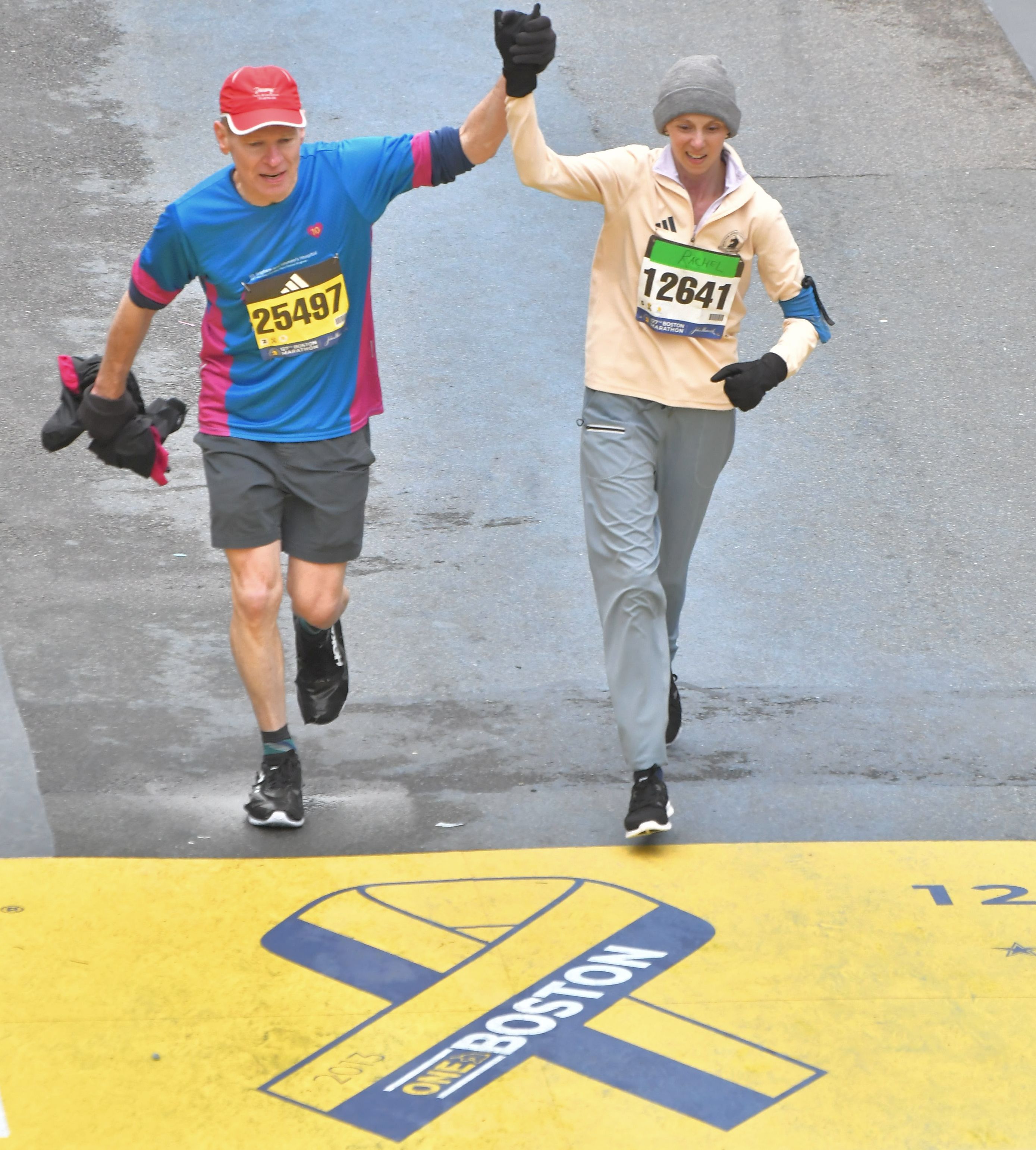
On April 17, 2023, Rachel stood at the starting line with him. Five months had passed since John called 911. She had worked toward this morning from a hospital bed, through the pain in Atlanta and the first careful attempts to walk. Now she had twenty-six miles ahead of her, with Tim alongside and John there to support her.
Rachel and Tim crossed the finish line on Boylston Street together in 5:44:46. John was there for the race she had first told him about when she could barely move in bed.
Two of Rachel’s doctors described her recovery as miraculous in her medical records:
Life after Boston
After Boston, Rachel and John began finding their way back into the restaurant. Their general manager, team and community had kept it going while they were away. Rachel returned gradually, spending more time in the kitchen as she felt able. She was happy to be cooking again.
Rachel experienced seizures after her fifth brain surgery, an operation to clean and cover skin that had not healed well.
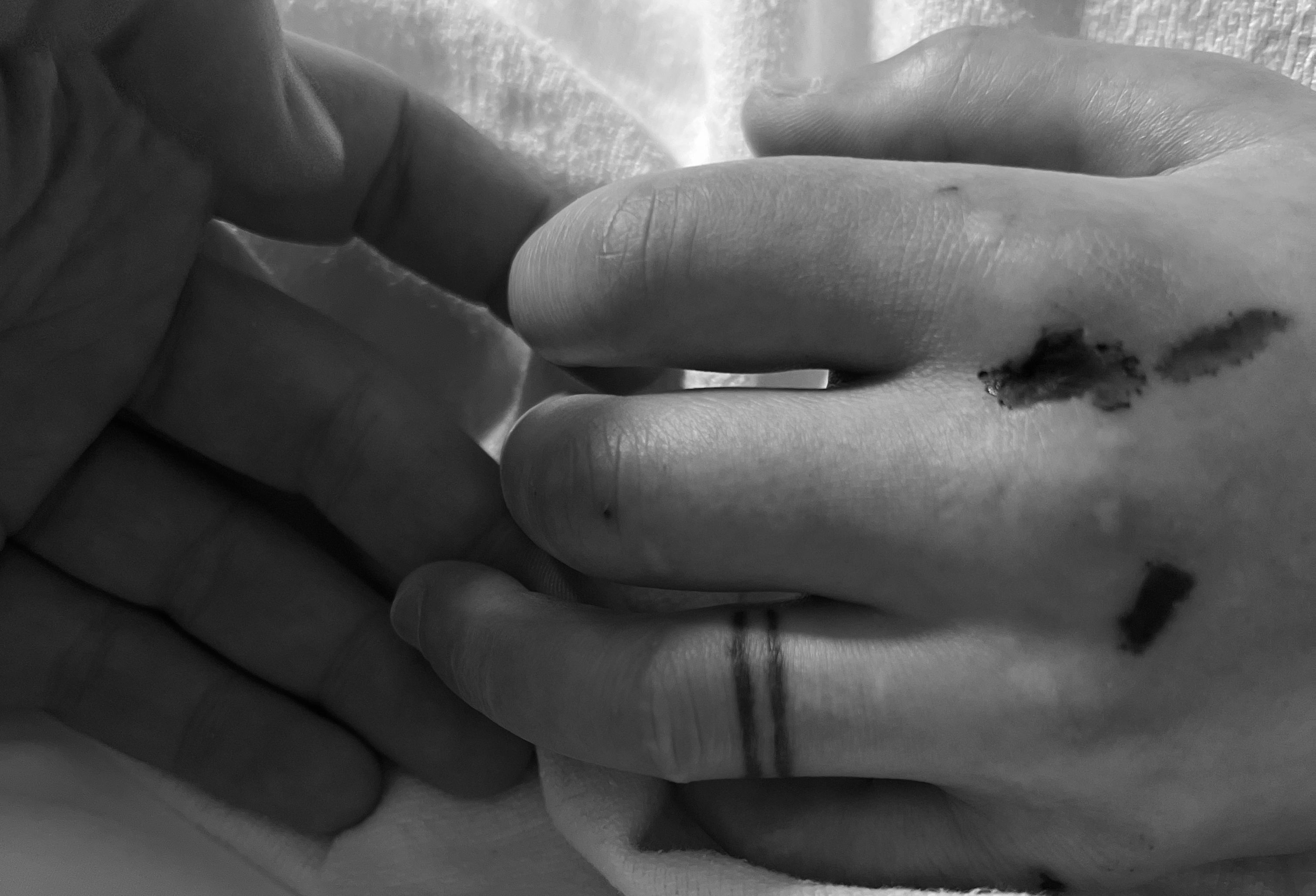
The words tattooed on her, “and yet i rise,” inspired the name yetrise. She shares her writing here, speaks with John about recovery, and raises money for the Brain Injury Recovery Foundation.
More from Rachel
"Don't be afraid. Just believe, and she will be healed."Luke 8:50
Rachel Foster's medical data sourced from OU Health, University of Oklahoma Medical Center records (984 pages).