
Quicksand
By Rachel Foster · June 17, 2026
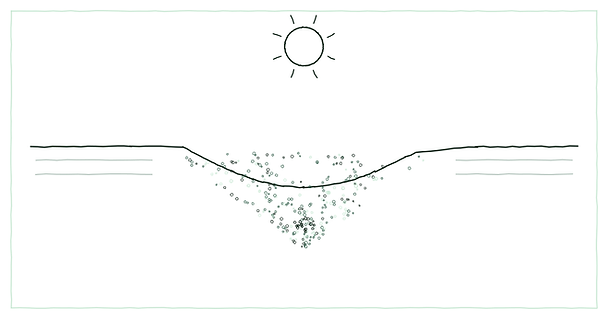
A “quick” Google search defines it as, “a water-saturated mixture of sand, clay, or silt that behaves like a non-Newtonian fluid.”
Hollywood has told us that quicksand has, at a painstakingly slow speed, consumed villains, good guys, unaware bystanders, and damsels in distress. The truth, however, is much more innocuous.
At a glance, its surface often looks perfectly solid. That is, until it’s stepped on, at which point the disturbance shifts it into a liquified state. But there are a sundry of myths about quicksand. It’s largely believed to “suck” its victims down into what amounts to drowning in sand. However one cannot drown- the human body floats. You would ultimately only be submerged halfway. The real danger is the water pressure making it difficult to pull your legs out.
The actual way to escape, if you happen to find yourself in such a slow-moving prison, is first to stay calm. Panic and sudden movements will only agitate the sand, causing it to liquify more. You must then lean back to distribute your weight evenly over the surface. The natural inclination is to force your way free by jerking, but it’s far wiser to gently wiggle and make deliberate movements to allow water to seep around the body, therein breaking the suction. Just as “slow and steady wins the race,” being calm and deliberate will help to position yourself horizontally. You are now in a position to roll to safety.
Realistically, you’re safe from being stuck in quicksand, until you’re not. I was relatively safe living my life day to day, until I wasn’t. And by all accounts, I wasn’t making any specific choices and decisions to avoid what would be likened to quicksand.
One does not have to "live for the thrill" to accept that every activity, passion, or endeavor carries inherent risk.
And truth be told, danger-even to the point of death-can be at any turn and in any activity. To me, it's interesting to compare the logistics of escaping the danger of quicksand to escaping the other dangers in life.
The knee-jerk reaction to both tends to be a wild quick-action attempt to get out of that situation. This almost assuredly seals your fate. The proven method to survive quicksand is so counterintuitive in the moment- stay calm while moving in slow and deliberate movements.
Once I finally came around to grasp my situation, it was painfully obvious that nothing was going to be fixed by rash actions and erratic, blind decisions.
Even though I DID have many rashes physically, and I WAS perilously blind in my left eye from what’s called a third nerve palsy, I came to understand that staying calm and moving deliberately was the key to surviving.
I'll leave you with these four points I learned the hard way, so you don't have to:
Be mindful next time you feel stuck.
Keep your wits about you.
Don’t allow yourself to make sweeping conclusions.
Continue trying to position yourself in such a way that makes it easier to crawl out and away from what’s sucking you in.
Remember, YOU are strong, YOU are resilient, and you can yetrise out of that quicksand!